
Face Treatment
FUE Hair Transplant in Kuala Lumpur, Malaysia
FUE (Follicular Unit Extraction) restores hair in thinning or bald areas using your own follicles. Aesthetic Clinic KL assesses each patient first, because the right plan depends on your hair loss pattern, donor hair and expectations. This page explains how FUE works, who it suits, recovery, risks and cost factors. For an overview of all techniques, see our hair transplant page.
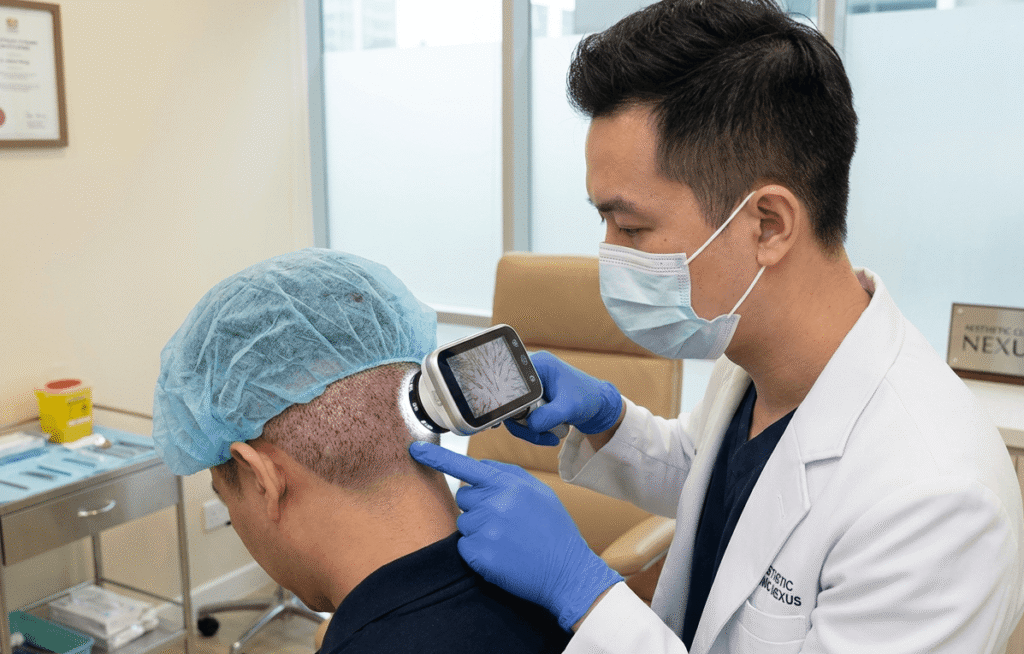
What Is FUE Hair Transplant?
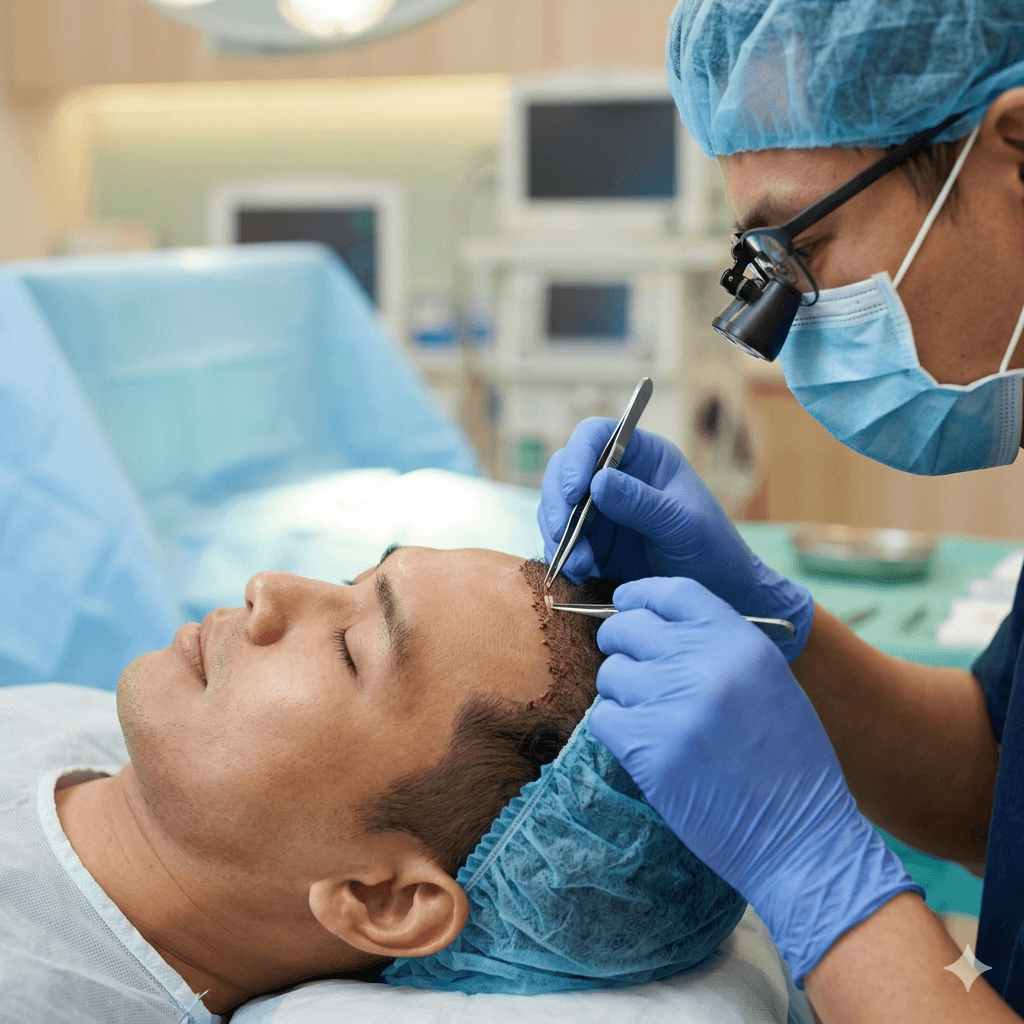
FUE removes individual follicular units, usually from the back or sides of the scalp. These follicles are generally resistant to the hormone behind pattern hair loss. They are placed into recipient sites at chosen angles and depths so the new hair grows in a natural direction. Because no strip of scalp is removed, FUE avoids a long linear scar.
FUE at a Glance
| Factor | Typical details |
|---|---|
| Technique | Individual follicular units extracted from the donor area and implanted in thinning areas |
| Anaesthesia | Local anaesthetic |
| Session length | Several hours, depending on graft numbers |
| Downtime | Usually a few days to about 2 weeks before looking socially normal |
| Regrowth | Begins around 3 to 4 months |
| Full result | Often 12 to 18 months |
| Pricing | Assessment-based; no fixed price without consultation |
FUE vs FUT: Comparison
| Factor | FUE | FUT (strip) |
|---|---|---|
| Donor method | Follicles taken individually | A strip of scalp is removed and divided |
| Scarring | Tiny dot scars, usually hidden by hair | A linear scar |
| Healing | Often quicker | Can feel tighter at the donor area |
| Best for | Those wanting short hairstyles and minimal visible scarring | Cases needing many grafts in one session |
Is a Hair Transplant Permanent?
Transplanted follicles from the donor area are generally long-lasting, but the word "permanent" needs care. Your existing, non-transplanted hair can continue to thin, which may leave an uneven look over time. That is why a good plan considers your future hair loss, not only today's hairline. Medical options such as finasteride and minoxidil may be discussed to help protect existing hair, and supportive treatments like PRP hair treatment are sometimes used alongside.
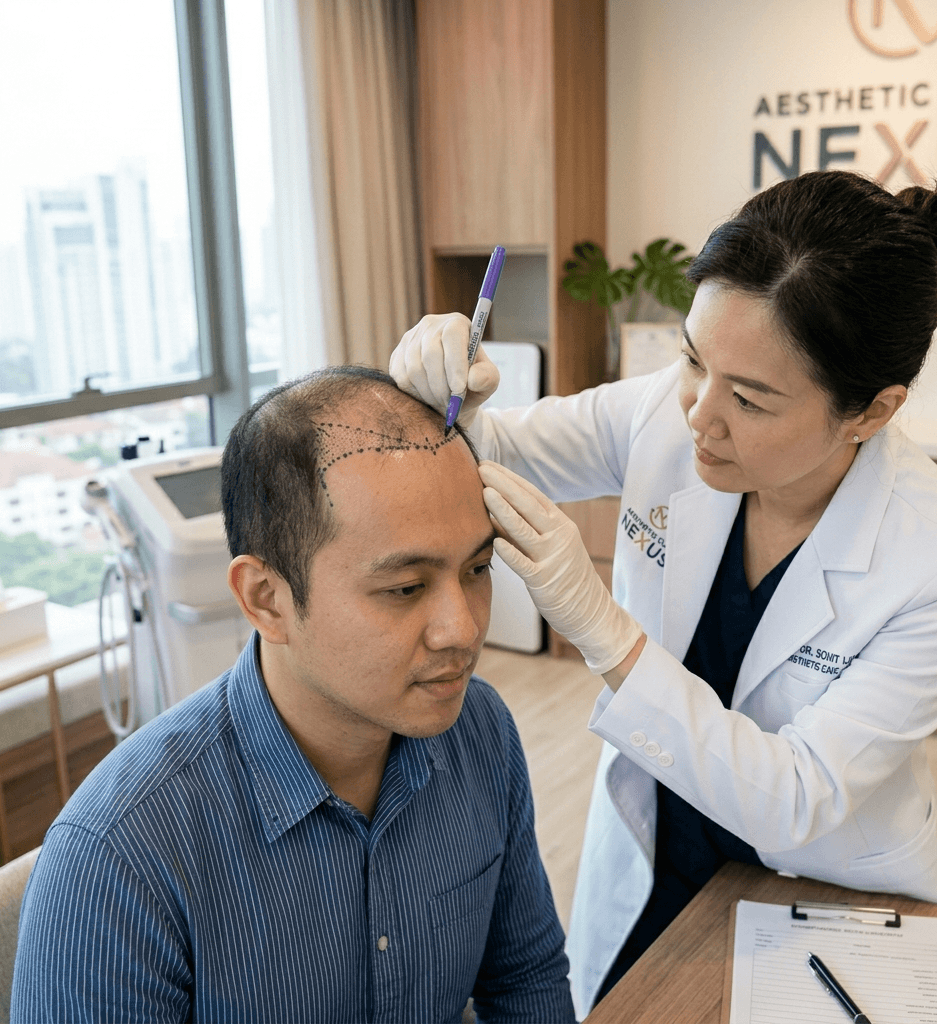
Who Is a Suitable Candidate?
| Often suitable | Needs careful assessment or may not be suitable |
|---|---|
| Stable, pattern hair loss in men or women | Rapid or unstable hair loss |
| Enough healthy donor hair | Poor donor density |
| Realistic expectations | Diffuse thinning without a clear pattern |
| Good general health | Scarring or patchy hair loss conditions, which need specialist diagnosis first |
| Willing to follow aftercare and stop smoking if advised | Uncontrolled medical conditions or unrealistic expectations |
If the cause of your hair loss is unclear, diagnosis comes first. Our hair loss treatment page covers non-surgical options.
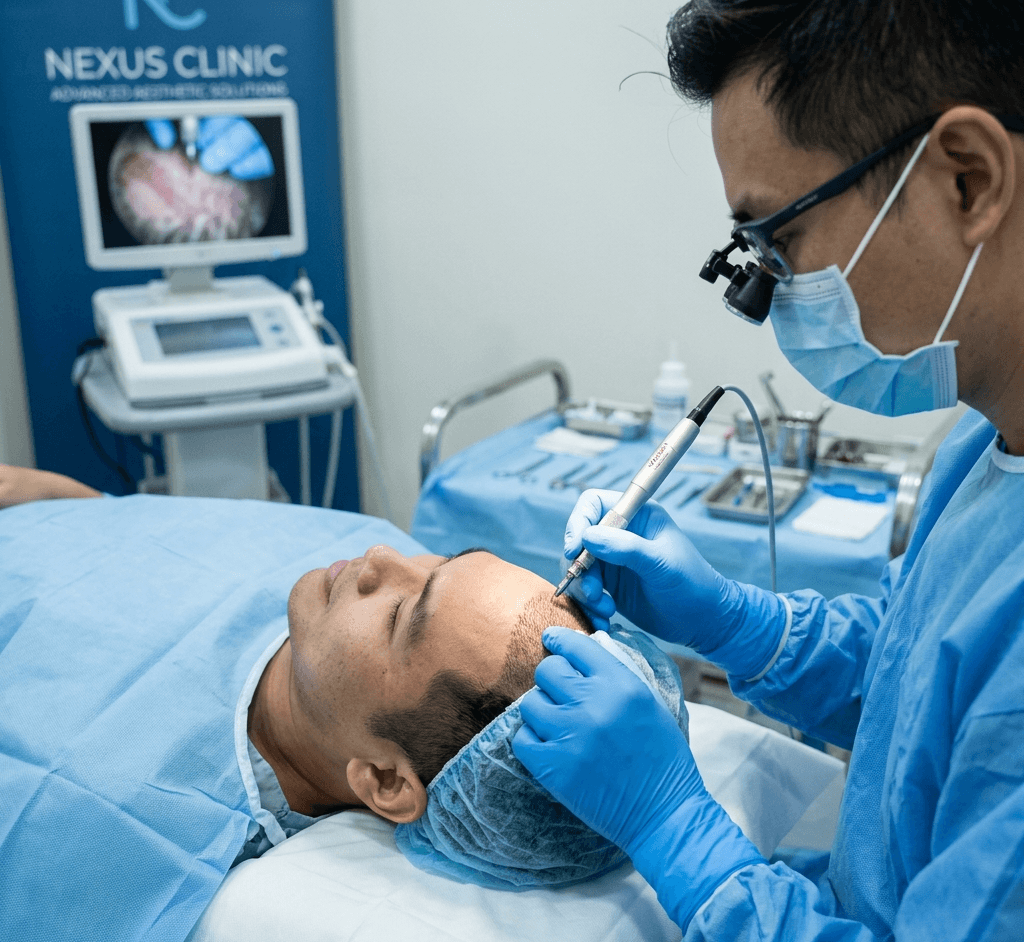
The FUE Procedure Step by Step
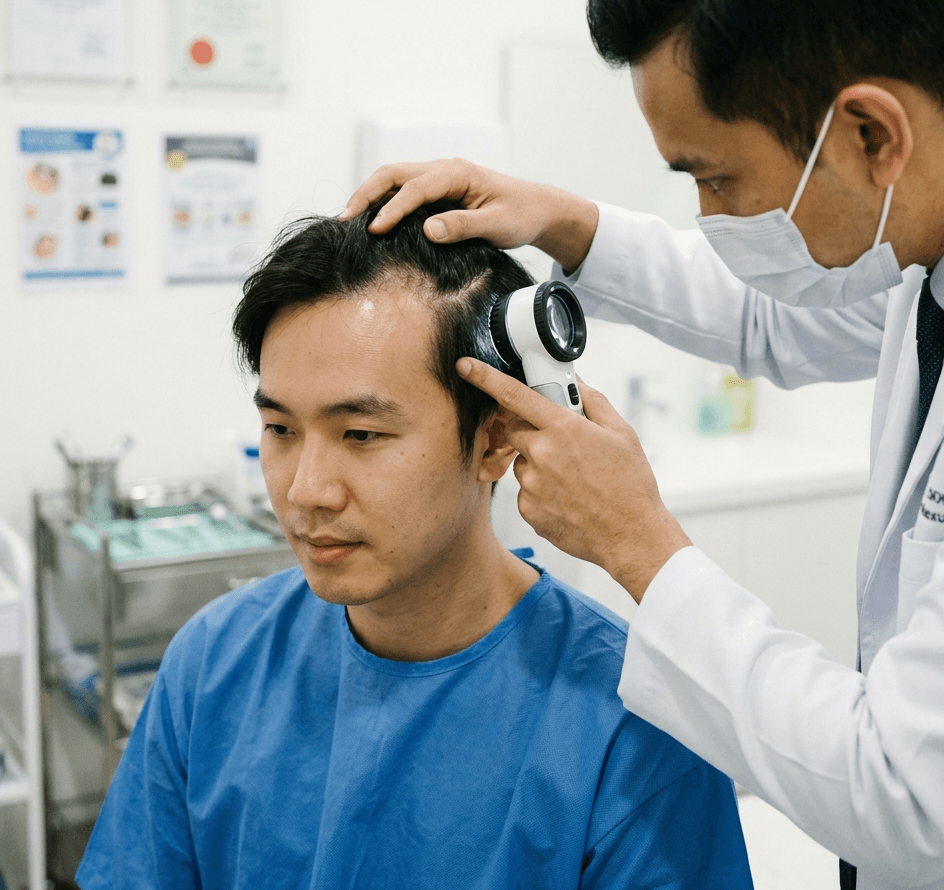
- Consultation and planning: your doctor examines your scalp, assesses hair loss pattern and donor density, estimates graft numbers and designs an age-appropriate hairline
- Preparation: the scalp is cleaned and numbed with local anaesthetic, and the donor area is trimmed
- Extraction: follicular units are removed one by one
- Implantation: recipient sites are created and grafts are placed with attention to angle, direction and density
- Aftercare: you receive written instructions and a follow-up plan
Recovery and Hair Growth Timeline
| Timeframe | What to expect |
|---|---|
| Days 1 to 3 | Redness, mild swelling (sometimes the forehead), tightness; sleep with your head elevated |
| Days 7 to 10 | Scabs clear as the scalp heals |
| Weeks 2 to 8 | Transplanted hairs shed; this is expected and temporary |
| Months 3 to 4 | New growth begins |
| Months 6 to 9 | Noticeable thickening |
| Months 12 to 18 | Final density becomes clear for many people |
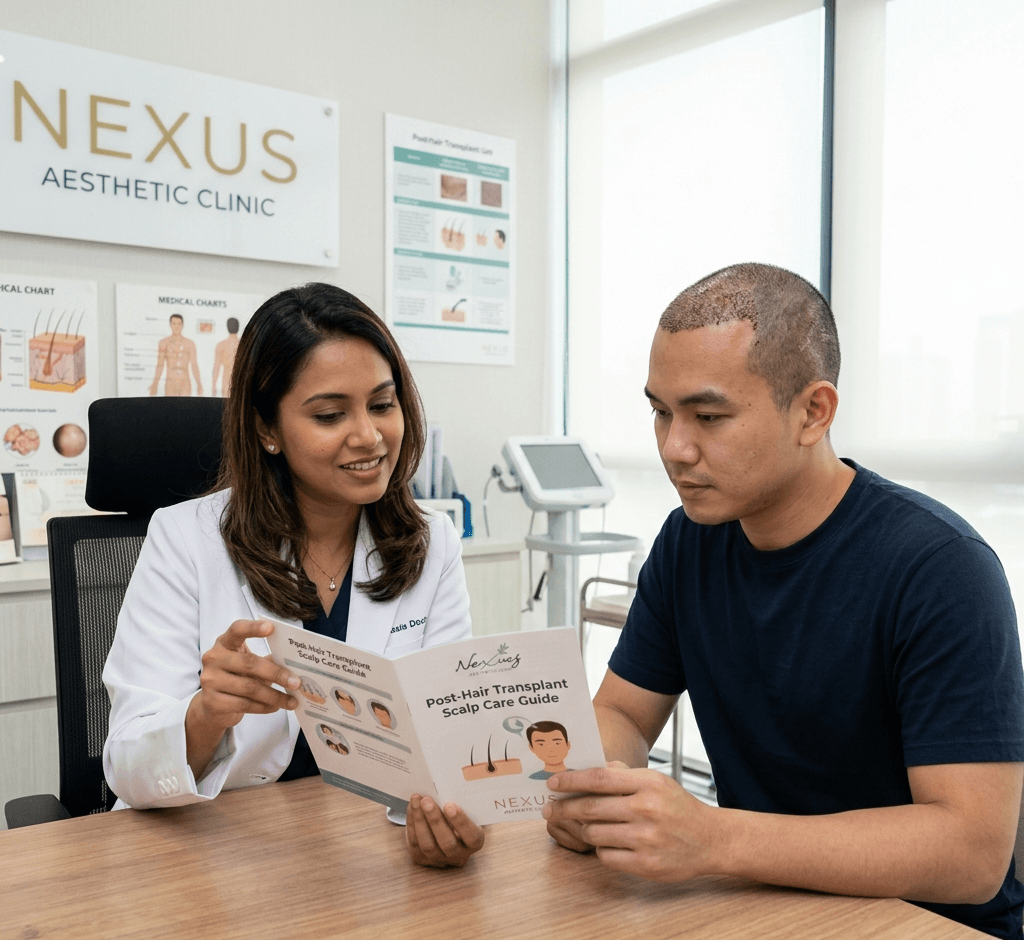
Aftercare: avoid touching the grafts, wash only as instructed, and avoid strenuous exercise, swimming, direct sun and smoking for the period your doctor advises. Timelines vary between individuals.
Risks and Side Effects
| Likelihood | Examples |
|---|---|
| Common and temporary | Swelling, redness, scabbing, itching, tightness, temporary numbness, shedding of transplanted hair |
| Less common | Folliculitis or ingrown hairs, infection, bleeding, cysts, uneven or poor growth, visible thinning in the donor area if over-harvested, an unnatural hairline or direction |
| Rare | Visible or raised scarring (more likely in those prone to keloids), skin damage affecting healing (higher in smokers), prolonged numbness or pain, reaction to anaesthetic |
Serious complications are uncommon when a trained doctor performs the procedure in a suitable facility, but no procedure is risk-free. Your doctor should explain the risks that apply to you.
Before-and-After Photos: How to Read Them
Photos help set expectations, but only if they are presented fairly. Look for:
- The clinic's own patients, shown with consent, not stock or illustrative images
- The same angle, lighting and hair length before and after
- The graft count, technique and whether medication was also used
- How long after surgery the "after" photo was taken; results are clearer after 12 months or more
- A range of patients, not only the best results
Results vary with donor quality, technique, healing and aftercare, and no clinic can promise a specific outcome.

What Affects the Cost of FUE?
We do not publish a flat price, because the cost depends on your individual plan:
- Number of grafts needed and the extent of hair loss
- Complexity, such as hairline design, or a combined area such as a beard transplant
- Facility, medication and post-operative follow-up
- The doctor's experience and the long-term plan for your donor area
Ask for a written, itemised quote showing what is included, such as consultation, procedure, medication and review visits, and what could cost extra. Compare quotes like for like.
Choosing a Hair Transplant Clinic in Malaysia
- Confirm the treating doctor's Malaysian Medical Council registration and hair-restoration training
- Make sure the procedure is done in a licensed medical facility
- Expect an honest graft estimate and discussion of donor limits and future hair loss
- Be cautious of pressure to book quickly or promises of guaranteed results


Related Hair Treatments
Your doctor may also discuss mesotherapy for hair loss or exosome hair treatment, where evidence is still developing.
Visit Aesthetic Clinic KL
| Detail | Information |
|---|---|
| Address | LG 10, Lower Ground Floor, Wisma UOA II, Jalan Pinang, 50450 Kuala Lumpur |
| Weekdays | 8am to 6pm |
| Saturday | 9am to 5pm |
| Sunday | 9am to 4pm |
Book a consultation to have your scalp assessed and your options explained. See also the clinic's FAQ and contact and location pages.
This page is general information and does not replace medical advice. Individual results vary.
Frequently Asked Questions
Is FUE hair transplant painful?
Local anaesthetic numbs the scalp so most people feel pressure rather than pain during the procedure. Some tenderness, tightness and itching can follow for days and is usually managed with prescribed medication.
How long does the procedure take?
Most sessions take several hours depending on the number of grafts and the area treated. Larger sessions can last most of a day. Your doctor will confirm the likely timing at consultation.
Is a hair transplant permanent?
Transplanted follicles from the donor area are generally long-lasting. Your remaining native hair can keep thinning. Medication such as finasteride or minoxidil may be advised to help protect it.
When will I see results?
Transplanted hairs usually shed within weeks, regrowth begins around three to four months and noticeable thickening appears by six to nine months. Final density can take twelve to eighteen months.
How many grafts will I need?
It depends on your hair loss pattern, donor density and goals. Your doctor estimates graft numbers at consultation. A conservative plan helps protect the donor area for any future treatment.
Can women have FUE hair transplants?
Yes, after assessment. Women often have diffuse thinning which needs evaluation and the donor area usually needs trimming. Not every woman with thinning hair is a candidate for surgery.
Is one session enough?
Many people plan for one session, but some need a second to increase density or as hair loss progresses. Your doctor will discuss realistic expectations and donor limits before you decide.
Can I get an exact price online?
Cost depends on graft numbers, extent of hair loss and complexity, so an exact price needs an assessment. Ask for a written, itemised quote showing what is included before you agree to proceed.
Are the results guaranteed?
No. Growth depends on donor quality, technique, healing and aftercare, and no clinic can guarantee a specific outcome. Your doctor should explain realistic expectations and the risks before you proceed.
Book Appointment
Related treatments
Patients considering FUE Hair Transplant often compare it with these options. Your doctor will advise which is suitable after a consultation.
See all Hair treatments →