
Face Treatment
Peptide Therapy Malaysia: What Is Legal, What Is Safe and What to Ask a KL Doctor
Doctor-led consultations at Aesthetic Clinic KL, Kuala Lumpur
Insulin is a peptide. So is the medicine in a doctor prescribed weight loss pen. So, apparently, is whatever’s in the vial marked “for research use only” that somebody’s selling on Instagram at a third of the price. Same word, wildly different situations.
That’s the problem with peptide therapy in Malaysia right now. The term covers decades-old, tightly regulated medicines and also a grey market of compounds with big promises and very little human evidence. This page sorts out which is which, what the rules say, and what a proper doctor consultation looks like before anyone puts a needle in you.

Peptides Medical Regulation in Malaysia: How the System Works
In Malaysia, a medicine generally has to be registered with the Drug Control Authority before it can be marketed or sold. Registered products carry an MAL registration number, and the National Pharmaceutical Regulatory Agency (NPRA) runs a public product database where you can check one. Prescription medicines also have to be prescribed and supplied under the country’s medicines and poisons laws.
There’s no single rule saying peptides are legal or illegal. It depends on the specific substance, the intended use, whether it’s registered and how it’s supplied. A registered peptide medicine given by a doctor for an approved reason is one thing. An unregistered injectable shipped from overseas is another, even if a clinic or a seller makes it sound routine.
A simple habit helps. Ask for the product name, the active ingredient, the manufacturer and the MAL number, then look it up yourself. A responsible clinic won’t mind.
What Is Peptide Therapy in Malaysia?
Peptides are short chains of amino acids, the same building blocks that make up proteins. Your body makes plenty of them and uses them as messengers for things like blood sugar, appetite, growth and tissue repair. Drug makers can copy or tweak some of these to create medicines.
So “peptide therapy” isn’t one treatment. It’s a label stuck on very different things, and the label alone tells you nothing about safety.
| Type | Examples | Evidence | Regulation |
|---|---|---|---|
| Established peptide medicines | Insulin, GLP-1 medicines such as semaglutide and tirzepatide, some hormone based therapies | Clinical trials for specific conditions | Registered, prescription controlled |
| Experimental peptides | BPC-157, TB-500, CJC-1295, ipamorelin and similar | Mostly lab and animal work, little solid human data | Generally not registered for human use, so check before assuming |
| “Research use only” vials | Anything sold online without a registration number | None for human use | Unregistered, quality unknown |
Notice that the first row is the only one where a doctor can point to a trial, a registration and a monitoring plan. That’s the gap that matters.
Which Peptide Medicines Are Registered in Malaysia?
Some peptide based medicines are well established and registered. The NPRA has reported registered products containing several GLP-1 medicines, including liraglutide, dulaglutide, semaglutide and tirzepatide. Insulin is the classic older example, and peptide based medicines are also used for osteoporosis and some hormone sensitive cancers.
For weight management, the GLP-1 medicines are the ones most people have in mind. Depending on your health and goals, a doctor might look at semaglutide injections as part of a supervised weight loss plan, or at tirzepatide, which works on two gut hormones instead of one. Either way it starts with an assessment, and a pen doesn’t just get handed over.
Registration is per product, not per ingredient. So “semaglutide is registered” doesn’t automatically cover the pen or vial in your hand. Check the MAL number on that specific product.

Peptide Therapy Legality and Doctor Consultation: What Changes When a Doctor Is Involved
A doctor can’t make an unregistered product registered. What a consultation does change is everything around the medicine: whether you need it at all, whether it’s suitable for your health, which product is correct, and who watches for problems afterwards.
Peptide therapy legality and doctor consultation really come down to a few questions:
- Is the exact product registered in Malaysia, and for what?
- Is your use of it established, or experimental?
- Who is prescribing it, and who is supplying it?
- What monitoring is planned, and what happens if something goes wrong?
If a clinic can’t answer those cleanly, treat it as an answer.
Risks of Unregistered Research Peptides in Malaysia
This is the part to read twice. The risks of unregistered research peptides in Malaysia aren’t only about the peptide itself.
| Risk | Why it matters |
|---|---|
| Unknown contents | The vial may contain a different amount, a different substance, or impurities |
| Contamination | Injectables need sterile manufacture and cold storage, and online sellers can’t prove either |
| Thin human evidence | Many popular claims come from animal studies and testimonials |
| Immune and injection-site reactions | Swelling, infection, allergy and more serious reactions can happen |
| No follow-up | Nobody is monitoring you, and nobody is accountable |
| Sport rules | Many peptides are prohibited under anti-doping rules, even if a doctor gave them |
The US FDA has flagged safety concerns, or too little safety information, for several peptides promoted by clinics and compounding services, including BPC-157, CJC-1295, ipamorelin and TB-500. And the World Health Organization warns that medicines bought from unauthorised online sellers are more likely to be illegal, unregistered, fake or substandard. A cheaper price isn’t a bargain if you can’t tell what’s inside.
That doesn’t prove every experimental peptide is useless. It means confident promises of healing or longevity are running ahead of the evidence.
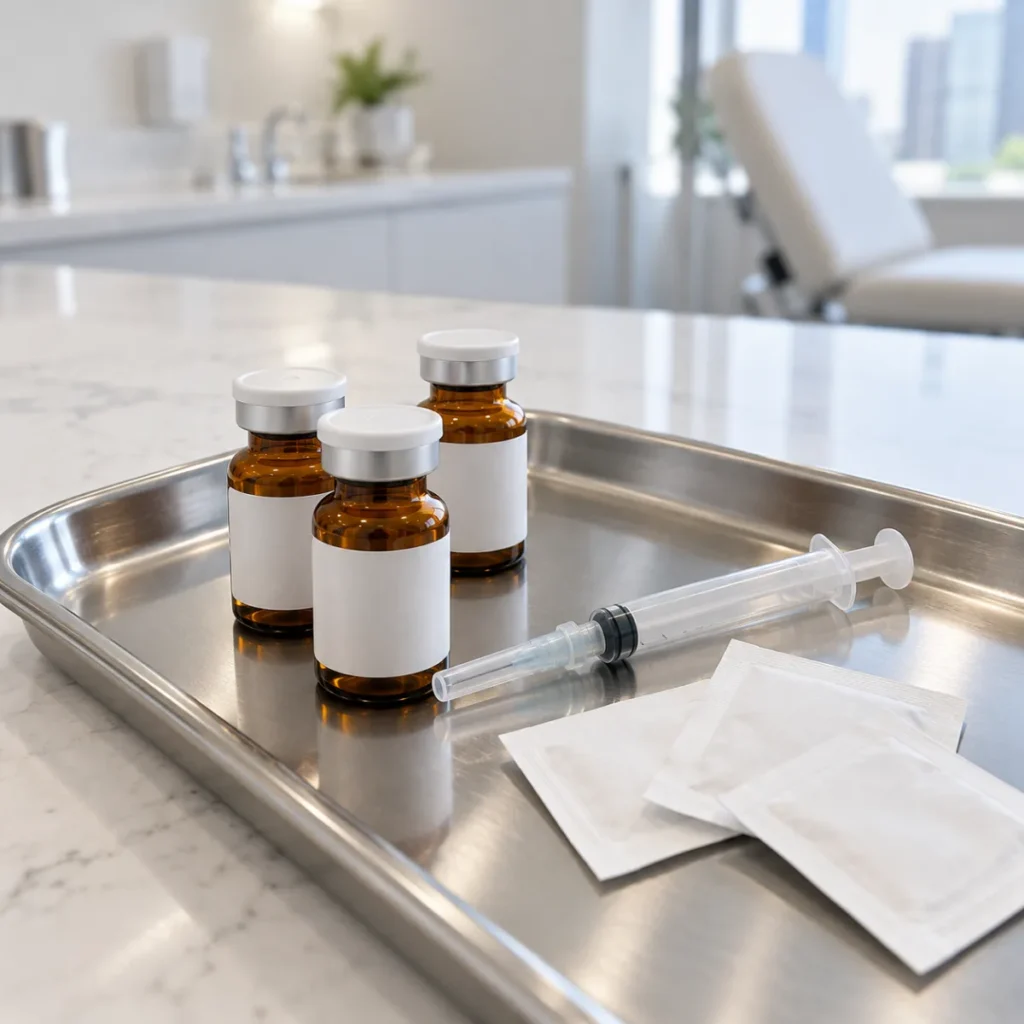
Doctor Prescribed Peptide Therapy: What a Peptide Treatment Consultation in Malaysia Covers
A peptide treatment consultation in Malaysia should feel more like an assessment than a sales pitch. Expect something like this:
- Your goal, in plain words. Weight, blood sugar, recovery, energy. Whatever’s behind the question.
- Your history, including conditions, medicines, allergies and pregnancy plans.
- A look at whether a registered medicine fits that goal, or whether another approach is better.
- A plan for monitoring, follow-up and what to do if side effects appear.
- A straight answer if the thing you read about online isn’t something a responsible doctor would give.
Sometimes the honest outcome is “you don’t need an injection for this.” You can see the doctors and clinic team who’d be assessing you before you book.
Peptide Injection in KL: What to Expect and What to Tell Your Doctor
A peptide injection in KL, when it’s a registered medicine, is usually a small subcutaneous injection, often self administered at home after training. Side effects depend on the medicine. GLP-1 medicines, for example, commonly cause nausea, vomiting, constipation or diarrhoea, and they slow stomach emptying.
That last point has a practical consequence. Malaysia’s NPRA has issued safety information about GLP-1 medicines and the risk of retained stomach contents and aspiration during general anaesthesia or deep sedation. If you take one and have a procedure coming up, tell your doctor and the anaesthetist beforehand.
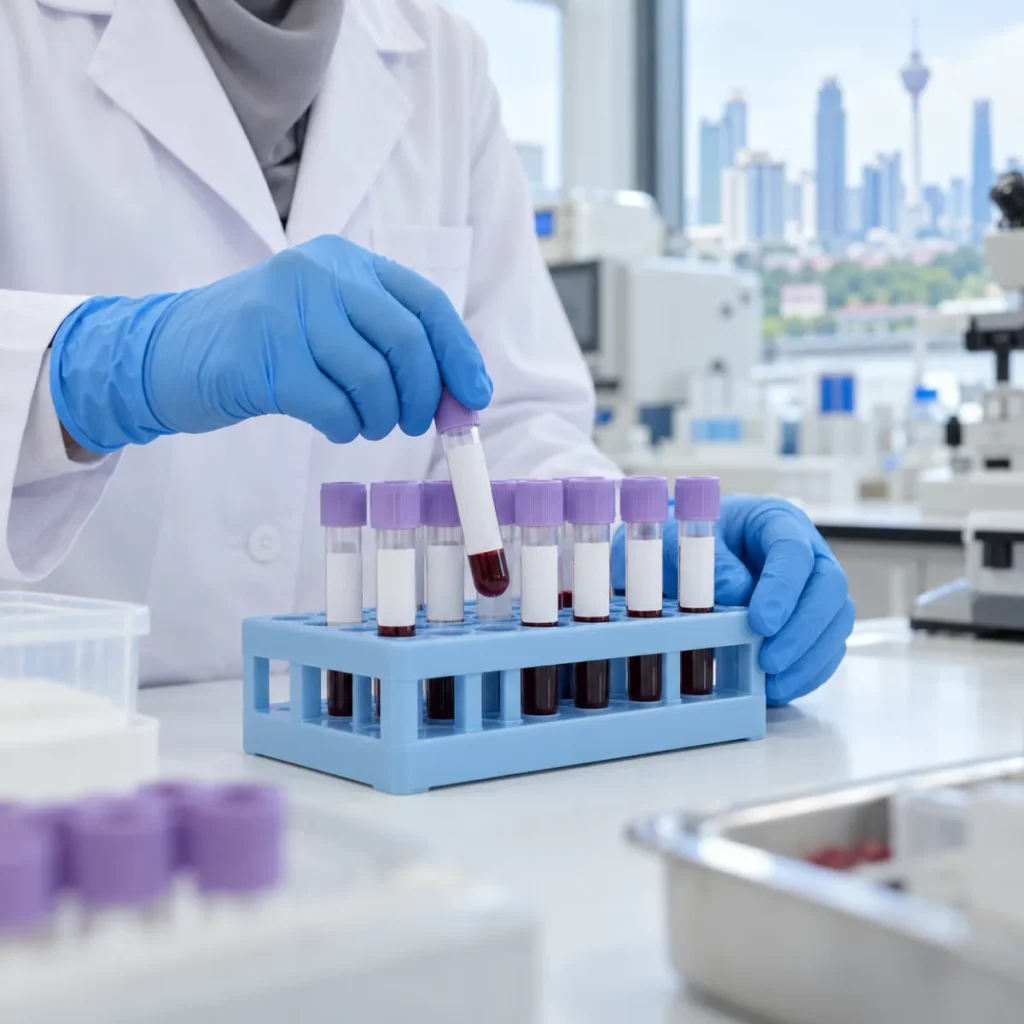
Peptide Therapy Safety Consultation: Questions to Ask Any Clinic
Before you accept anything described as peptide therapy, ask:
- What is the exact name of the peptide?
- Is it registered with the Drug Control Authority, and what’s the MAL number?
- What condition is it approved to treat?
- Is my use established or experimental?
- What human evidence supports it?
- Who made it, and how is its quality checked?
- What are the short and long term risks?
- Is there a safer or better studied alternative?
- How will I be monitored?
A good doctor answers without getting defensive or vague. If you get promises instead of answers, walk out.
Who Doctor Prescribed Peptide Therapy Suits, and Who It Doesn’t
| It may be worth discussing if | It’s probably not for you if |
|---|---|
| You have a recognised medical reason, like weight management or diabetes, that a registered peptide medicine treats | You want a “longevity shortcut” with no specific medical reason |
| You’re willing to have follow-up and monitoring | You want to buy a product and inject it without supervision |
| You’re happy to hear “no” or “something simpler” | You’re pregnant or planning pregnancy (a doctor must assess this first) |
| You’re prepared to check the product and registration yourself | You compete in drug tested sport and haven’t checked the rules |
If weight is what’s really behind the question, a doctor supervised GLP-1 programme for weight loss is usually a better place to begin than anything experimental, since those are the medicines with proper trial data behind them.

Peptide Therapy Cost in Malaysia
There’s no one price, because “peptide therapy” isn’t one product. Cost depends on the medicine, the dose, the length of treatment, and the monitoring and follow-up visits involved. After a consultation you’ll get a written quote, and general questions about appointments are covered in the clinic’s frequently asked questions. Be careful with very cheap products that skip the assessment entirely.
Why Choose Aesthetic Clinic KL for a Peptide Consultation in Kuala Lumpur?
It comes down to how the consultation is run. You get a doctor’s time, a straight explanation of what’s registered and what isn’t, and no pressure to start anything on the first visit. The clinic is on the lower ground floor of Wisma UOA II, and the map, directions and opening hours are online.


Ready to Talk It Through? Book a Peptide Treatment Consultation in Kuala Lumpur
A short, private consultation will tell you what’s registered, what’s suitable for you and what to avoid. If peptide therapy isn’t the right answer, you’ll hear that too.
Book a consultation at Aesthetic Clinic KL, or message the team on WhatsApp at +60 16-824 5699. The clinic is at LG 10, Lower Ground Floor, Wisma UOA II, Jalan Pinang, 50450 Kuala Lumpur.

Frequently Asked Questions
Is peptide therapy legal in Malaysia?
It depends on the specific peptide, its use and whether it’s registered and prescribed properly. A registered peptide medicine given by a doctor for an approved reason is fine, while unregistered products are a different matter.
Which peptide medicines are registered in Malaysia?
The NPRA has reported registered products containing GLP-1 medicines such as liraglutide, dulaglutide, semaglutide and tirzepatide, and insulin is a long established peptide medicine. Always check the MAL number of the specific product.
What does doctor prescribed peptide therapy involve?
An assessment of your goals and health, a decision on whether a registered medicine fits, then monitoring and follow-up. It isn’t a single product or a one-visit fix.
Is BPC-157 allowed in Malaysia?
It’s generally not a registered medicine for human use here, and the US FDA has raised safety concerns about it. A doctor should explain this plainly if you ask.
What are the risks of unregistered research peptides in Malaysia?
Unknown contents, contamination, weak human evidence and no medical follow-up are the main ones. Online sellers also can’t prove how a vial was made or stored.
How do I check if a peptide product is registered?
Search the product in the NPRA’s database and look for an MAL registration number. If the seller can’t give you one, don’t use it.
What should I expect from a peptide treatment consultation in Malaysia?
A conversation about your goals and history, an explanation of what’s registered and suitable, and a plan for follow-up. You can leave without starting anything.
Do peptide injections have side effects?
Yes, and they vary by medicine. Nausea and injection-site reactions are common with some, and your doctor will go through what applies to you.
Can I use peptides if I play competitive sport?
Check first, because many peptides are prohibited under anti-doping rules even when a doctor prescribes them. Ask about a therapeutic use exemption before starting.
Book Appointment
Related treatments
Patients considering Peptide Therapy often compare it with these options. Your doctor will advise which is suitable after a consultation.
See all Longevity treatments →