
Face Treatment
Hormone Replacement Therapy in Malaysia: Doctor-Led, Individually Assessed, Properly Monitored
Hormone Replacement Therapy (HRT) is one of the most evidence-backed interventions available for managing the symptoms of perimenopause, menopause, and hormone deficiency in both women and men. It is also one of the most misunderstood, shaped by decades of shifting guidance, outdated studies, and conflicting media coverage that has left many patients uncertain whether it is safe, appropriate, or even available for them.
At Aesthetic Clinic KL, HRT consultations are conducted by a licensed doctor, not a wellness adviser. Every patient goes through a structured eligibility assessment before any treatment is prescribed, and every patient on HRT is monitored at regular intervals throughout their programme. This page explains what HRT involves, who it is for, what bioidentical hormone discussion means in a clinical context, what the benefits and risks look like with current evidence, and what affects the cost of HRT consultation in Malaysia.
Important: This page is general information only and is not a substitute for personalised medical advice. HRT is a prescription treatment that requires a full medical assessment, individual risk evaluation, and ongoing monitoring by a qualified doctor.

Who Is HRT For? Eligibility Assessment at Aesthetic Clinic KL
HRT is appropriate for a broader range of patients than many people assume. The eligibility assessment covers your symptoms, hormone levels, personal and family medical history, cardiovascular health, and any conditions that affect risk.
Women who may benefit from HRT:
- Perimenopausal women experiencing symptoms that are affecting quality of life, hot flushes, night sweats, disrupted sleep, mood changes, joint pain, brain fog, or vaginal dryness, even if periods have not yet stopped
- Postmenopausal women, including those with established bone density loss where oestrogen plays a protective role
- Women with premature ovarian insufficiency (POI), diagnosed before age 40, for whom HRT is strongly indicated to protect bone and cardiovascular health until at least the average age of natural menopause
- Women experiencing low libido, fatigue, or mood changes related to declining oestrogen or testosterone levels
Men who may benefit from testosterone-based HRT:
- Men with confirmed low testosterone on blood testing, experiencing fatigue, reduced libido, reduced muscle mass, mood changes, or cognitive decline, see our Testosterone Replacement Therapy page for full details
HRT requires careful assessment or is generally not appropriate for:
- History of oestrogen-receptor positive breast cancer or certain other hormone-sensitive cancers, requires specialist oncology input
- Active or recent venous thromboembolism (blood clots), route of oestrogen delivery significantly affects clot risk; this is assessed individually
- Active liver disease
- Undiagnosed vaginal bleeding
- Active cardiovascular disease, depending on type and severity, assessed case by case
This list is not exhaustive. A thorough consultation with full medical history review is the only way to establish individual eligibility accurately.
What Is Hormone Replacement Therapy?
Hormone replacement therapy replaces or supplements hormones that the body is producing in declining or insufficient amounts. In women, this primarily means oestrogen, often combined with progesterone or progestogen. In men, it typically centres on testosterone, sometimes referred to as Testosterone Replacement Therapy (TRT), which we cover in detail on our TRT page.
HRT is not a single drug or a single protocol. It encompasses a wide range of formulations, delivery methods, and hormone combinations, all of which are selected based on the individual patient's hormone levels, symptoms, medical history, and risk profile. This is precisely why a consultation and proper hormone blood test come before any prescribing decision.
Common forms of HRT:
| Form | Examples | Notes |
|---|---|---|
| Oral tablets | Oestrogen or combined oestrogen-progesterone tablets | Convenient; first-pass liver metabolism means slightly different risk profile to transdermal routes |
| Transdermal patches | Oestrogen patches applied to skin | Bypasses liver; associated with lower VTE (clot) risk than oral oestrogen |
| Topical gels or creams | Oestrogen gel applied daily to skin | Good absorption; convenient; dose adjustable |
| Vaginal preparations | Oestrogen pessaries, rings, or creams | Primarily for urogenital symptoms; minimal systemic absorption |
| Subcutaneous pellets | Bioidentical hormone pellets inserted under the skin | Slow-release; discussed further below |
| Injections | Testosterone or oestrogen IM injections | Used in specific protocols, particularly TRT |
Bioidentical Hormone Discussion, What It Actually Means
"Bioidentical hormones" is a term used frequently in wellness settings, often without clinical precision. In a clinical context it has a specific meaning that is worth clarifying.
Bioidentical hormones are hormones that are chemically identical in molecular structure to those produced naturally by the human body, as opposed to synthetic analogues that have a similar but not identical structure. Many pharmaceutical-grade HRT preparations available in Malaysia are bioidentical by this definition, including micronised progesterone (which is body-identical) and oestradiol (the same molecule as naturally produced oestrogen).
What bioidentical does not automatically mean:
- "Safer" than pharmaceutical HRT, molecular identity to the body's own hormones does not eliminate all risks, particularly at doses that exceed what the body would naturally produce
- Unregulated or compounded only, many regulated, pharmacy-grade HRT products are bioidentical
- One-size-fits-all, the same bioidentical oestradiol gel can be prescribed at very different doses and frequencies; what matters is the dose, route, and combination
Compounded bioidentical hormones, custom-prepared mixtures from compounding pharmacies, are a separate discussion. They are not regulated in the same way as pharmaceutical products, meaning potency, purity, and consistency are not independently verified. Some patients seek them out; our doctors discuss the evidence honestly at consultation rather than dismissing or uncritically endorsing them.
At Aesthetic Clinic KL, bioidentical hormone discussion means an honest, evidence-based conversation about which formulations are appropriate for your specific situation, not a blanket recommendation for one approach.
HRT Benefits and Risks, What Current Evidence Says
The evidence on HRT has evolved significantly since the early 2000s studies that generated widespread concern. A more nuanced picture has emerged:
Well-supported benefits:
- Symptom relief, hot flushes, night sweats, vaginal dryness, and disrupted sleep respond well to oestrogen therapy; this is one of the most consistently demonstrated effects in the literature
- Bone protection, oestrogen maintains bone density; HRT reduces fracture risk in postmenopausal women, particularly when started within 10 years of menopause
- Cardiovascular protection when started early, evidence supports a "timing hypothesis", HRT initiated within 10 years of menopause or before age 60 is associated with cardiovascular benefit, not harm, in most healthy women
- Mood and cognitive function, oestrogen has a role in serotonin and dopamine regulation; many women report significant improvement in mood, focus, and cognitive clarity on HRT
- Urogenital health, oestrogen preserves vaginal tissue integrity, reduces urinary tract infections, and improves urinary urgency; vaginal oestrogen specifically is safe and effective even for patients who cannot use systemic HRT
Risks that require individual assessment:
- Breast cancer, the association between combined oestrogen-progestogen HRT and breast cancer risk is real but modest and complex. It varies by progestogen type (micronised progesterone carries lower risk than synthetic progestogens), duration of use, and when HRT is started. This is discussed in full at consultation
- Venous thromboembolism (VTE), oral oestrogen increases VTE risk; transdermal oestrogen does not carry the same elevation in most studies. Route selection matters
- Stroke, modest increase with oral oestrogen at higher doses; transdermal oestrogen at standard doses is not associated with the same increase
The key phrase across all of this is individual assessment. A woman's risk profile at 48 who stopped smoking five years ago and has no family history of breast cancer looks very different from another woman of the same age with different health circumstances. HRT prescribing is not a population-level decision, it is an individual one.
HRT Monitoring, What Ongoing Care Involves
Patients asking about "hormone replacement treatment monitoring" need to understand that starting HRT is not the end of the clinical process, it is the beginning of an ongoing one. At Aesthetic Clinic KL, patients on HRT are reviewed at defined intervals:
- Initial follow-up, typically 6 to 12 weeks after starting, to assess symptom response, side effects, and whether dose adjustment is needed
- Hormone level monitoring, blood tests at appropriate intervals confirm that levels are within therapeutic range; this is particularly important for testosterone therapy and for patients on pellet or injectable protocols
- Annual review, a full reassessment of benefits, risks, any new symptoms or health changes, and continued appropriateness of the current regimen
- Breast health, guidance on breast awareness and appropriate mammography scheduling in line with national screening recommendations
- Cardiovascular and metabolic markers, blood pressure, lipid profile, and relevant metabolic markers reviewed periodically depending on your individual risk profile
HRT is not a set-and-forget prescription. Dose needs can change over time, new health developments affect the risk-benefit balance, and some patients choose to taper off at a certain point, all of which are managed through the monitoring relationship with your doctor.

What to Expect at an HRT Consultation in KL
Step 1, Detailed history and symptom review. Your doctor takes a thorough history covering menstrual history, symptoms, medications, personal and family medical history, cardiovascular health, and any previous hormone testing.
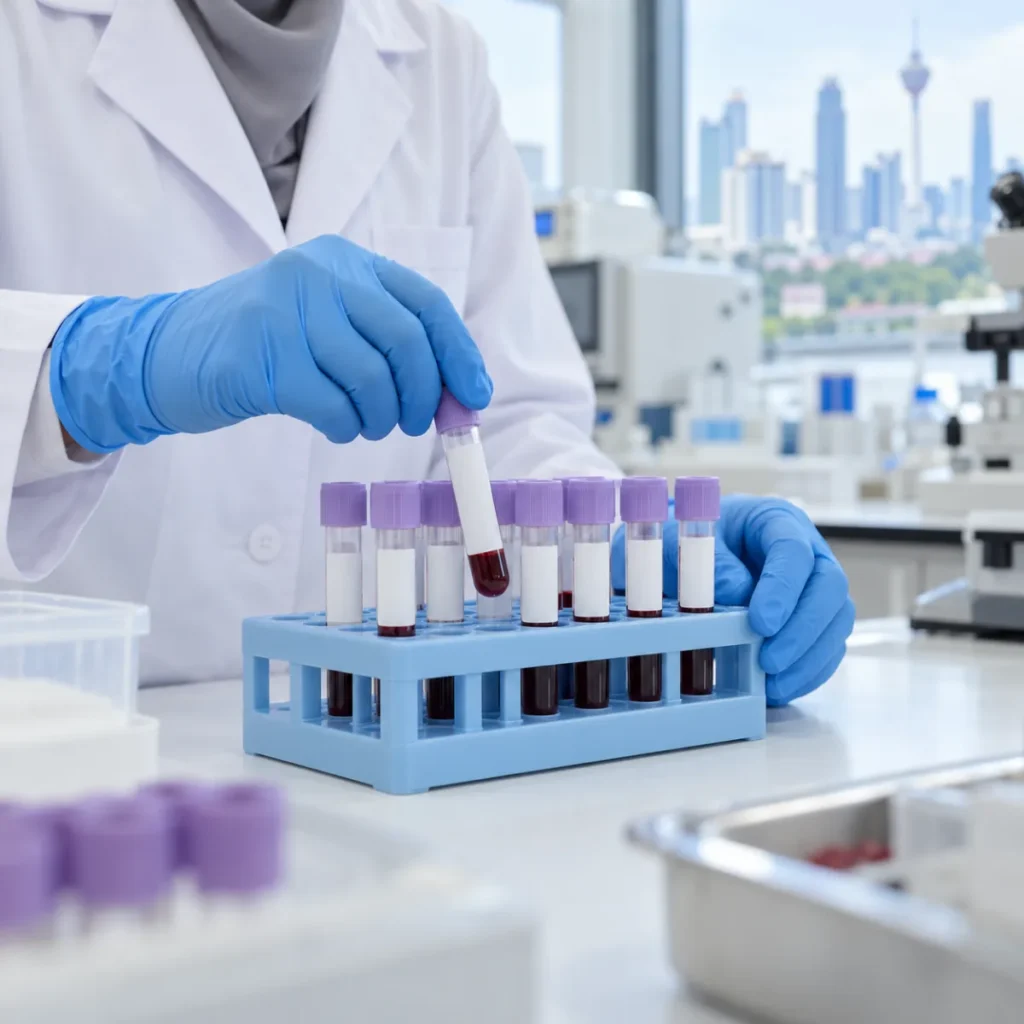
Step 2, Hormone testing. If not already completed, a hormone blood test is arranged to establish your baseline levels before any prescribing decision. Starting HRT without knowing your baseline levels is not appropriate practice.
Step 3, Risk-benefit discussion. Your doctor walks through the relevant benefits and risks based on your individual profile, not a generic leaflet, but a personalised conversation about your specific circumstances.
Step 4, Formulation selection. If HRT is appropriate, your doctor selects the most suitable formulation, route, and dose, taking into account your symptoms, VTE risk, convenience preference, and any relevant contraindications.
Step 5, Monitoring plan. Follow-up appointments and relevant blood tests are scheduled before you leave, so ongoing monitoring is built into the plan from the start.
HRT Consultation Cost in Malaysia, Factors That Affect Pricing
We do not publish fixed prices, as the cost of HRT in Malaysia depends on the individual treatment plan:
| Factor | Why It Affects Cost |
|---|---|
| Type of HRT prescribed | Gel, patch, tablet, pellet, and injection-based protocols differ in medication cost |
| Combination vs. oestrogen-only | Combined oestrogen-progesterone regimens involve two hormones; oestrogen-only protocols are for women post-hysterectomy |
| Hormone testing required | Initial and follow-up blood panels are a separate cost; comprehensive panels cost more than targeted follow-up tests |
| Frequency of monitoring appointments | More frequent review in the first 6 months; less frequent once stable |
| Duration of treatment | HRT is long-term for many patients; total cost is better evaluated over a 6–12 month period than per appointment |
| Bioidentical compounded formulations | Where applicable, compounded preparations differ in cost from standard pharmaceutical HRT |
Why Aesthetic Clinic KL for HRT in Kuala Lumpur?
- Doctor-led assessment and prescribing, not a wellness programme without medical oversight
- Evidence-based bioidentical hormone discussion, honest conversation about what different formulations mean clinically, not marketing language
- Structured monitoring built in, follow-up appointments and blood tests are planned from the start, not left to the patient to chase
- Integrated hormone services, HRT works alongside our hormone blood testing and, for men, Testosterone Replacement Therapy under one clinical roof

Frequently Asked Questions
What is the cost of an HRT consultation in Malaysia?
Consultation cost depends on whether hormone testing is included, the complexity of assessment, and your treatment plan. We do not publish fixed prices, contact us directly for a cost estimate based on your specific situation and needs.
Am I eligible for HRT if I still have periods?
Yes. Perimenopausal women with irregular cycles and symptoms are frequently appropriate candidates for HRT. Eligibility is assessed on symptoms, hormone levels, and medical history, not solely on whether periods have stopped.
Is HRT safe after 50?
For most healthy women without specific contraindications, HRT initiated within 10 years of menopause or before age 60 is considered appropriate and beneficial under current clinical guidance. Individual risk assessment determines this, not age alone.
What is the difference between bioidentical and conventional HRT?
Bioidentical hormones are chemically identical in structure to those the body produces. Many regulated pharmaceutical HRT products are already bioidentical. The key clinical questions are dose, route, and combination, not solely whether a hormone is bioidentical.
How long does it take for HRT to work?
Vasomotor symptoms (hot flushes, night sweats) often improve within 4 to 6 weeks. Mood, sleep, and energy changes may take 2 to 3 months to fully establish. Urogenital symptoms with vaginal oestrogen take 8 to 12 weeks for meaningful improvement.
Can I stop HRT at any time?
Yes, but gradual tapering is generally preferable to abrupt cessation to minimise symptom rebound. Your doctor advises on the most appropriate approach based on your current regimen and duration of treatment.
Do I need a blood test before starting HRT?
Yes. Baseline hormone levels should be established before prescribing to confirm deficiency, guide dosing decisions, and provide a reference point for monitoring treatment response. Starting without testing is not recommended practice.
Will HRT cause weight gain?
There is no strong evidence that appropriately dosed HRT causes weight gain. Perimenopause itself is associated with weight redistribution; HRT may actually help reduce this by restoring hormonal balance. Individual responses vary and are monitored at follow-up.
Is HRT available for men as well as women?
Testosterone-based hormone replacement for men with confirmed low testosterone is available, see our dedicated Testosterone Replacement Therapy page for full details on the male HRT programme.
Book Appointment
Related treatments
Patients considering Hormone Replacement Therapy often compare it with these options. Your doctor will advise which is suitable after a consultation.
- Testosterone Replacement Therapy→
- P-Shot→
- Erectile Dysfunction Treatment→
- Menopause Hormone Therapy→
- Hormone Testing→
- Low Testosterone Test→