
Face Treatment
Pigmentation Treatment Malaysia: Dark Spots, Melasma and Uneven Skin Tone Treatment in KL
Doctor-led pigmentation care at Aesthetic Clinic KL, Kuala Lumpur
“I’ve got pigmentation” can mean about five different things. Maybe it’s a handful of sun spots on the cheeks, or a grey-brown patch that came with pregnancy, or flat marks left by old pimples, or a general blotchiness you can’t quite pin down. Each one has a different cause, so each one needs its own fix, and that’s why the same cream works for your friend and does nothing for you.
So the first step in any pigmentation treatment in Malaysia is simple. Work out what kind of mark it is. Everything else follows from that, and it saves you a lot of money on treatments that were never going to work.
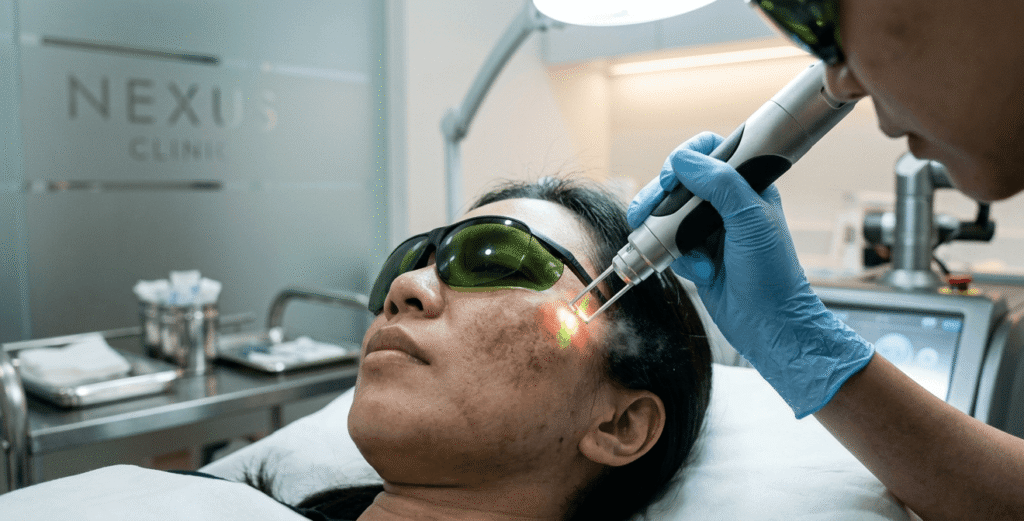
What Is Skin Pigmentation? Why Dark Patches Form
Pigmentation is just your skin making extra melanin in certain spots. Sun, hormones, inflammation and genes can all switch that on. Once the extra pigment is there, it can sit near the surface or deeper down, and how deep it sits matters a lot for what helps.
Here in Malaysia, strong sunshine all year makes this very common. Skin with more natural pigment also tends to react to irritation by making more of it, so a pimple, a scratch or a harsh product can leave a mark that outlasts the cause.
Face Pigmentation Consultation in Kuala Lumpur: How We Tell Your Type Apart
A face pigmentation consultation in Kuala Lumpur starts with questions: when it appeared, what it followed, whether it’s changed, what you’ve tried. Then the doctor looks closely at your skin. Many clinics also use a Wood’s lamp, a special light that helps show how deep the pigment sits.
You’ll usually leave with a clear idea of which kind you have. Anything that looks unusual, like a spot that’s changing, getting raised or bleeding, should be checked before any laser goes near it. Not every dark patch is harmless pigment.
Which Kind of Mark Is It? A Quick Guide
| What you see | Likely type | Usual behaviour |
|---|---|---|
| Small, flat, sharp-edged spots on sun-exposed skin | Sun spots | Stable, don’t fade on their own |
| Blotchy, symmetrical brown or grey patches on cheeks, forehead or lip | Melasma | Comes and goes, tends to recur |
| Flat marks where a pimple or rash used to be | Post-inflammatory marks | Often fade slowly once the cause is under control |
| Small spots that darken in the sun | Freckles | Come back with sun |
| General dullness and patchiness | Uneven tone | Often a mix of the above |
Sun Spots Treatment in Kuala Lumpur and Dark Spots Removal in Malaysia
Sun spots are the easy win. They’re individual marks built up over years of sun, so they can be targeted one at a time. Dark spots removal in Malaysia often uses a pigment laser, which breaks the pigment into tiny pieces that your body clears away over the following weeks. The spot may look darker for a few days, then flake and fade.
A shorter-pulse laser like pico laser is one common choice. Once they’re gone, sun spots don’t usually come back on their own, but new ones can form if you keep taking sun, which is why sunscreen is part of the plan, not an extra.


Hyperpigmentation Treatment in KL: Marks Left by Acne, Irritation and Skincare Mishaps
Post-inflammatory hyperpigmentation, the dark mark left after skin gets inflamed, is one of the most common reasons people book. It’s the flat brown or reddish-brown patch where a pimple used to be.
The honest advice: treat the cause first. If new breakouts keep landing, the marks will keep coming, so our acne treatment usually runs alongside. After that, marks often fade with patience and sun protection, and the doctor can speed it up with the right products or a gentle procedure. Be careful with harsh scrubs and aggressive home kits, since irritation can make marks worse, and they’re a common way to turn a small mark into a stubborn one.
Melasma: Why It Needs a Slower, Gentler Plan
Melasma is the one that humbles everyone. It’s driven by hormones, heat and sunlight as well as pigment, so it tends to return. It’s managed, not cured. Treatment is usually layered, starting with strict sun protection, then suitable topical products, then procedures if needed, then maintenance for the long term.
Lasers can help some people, but they’re used carefully, at low settings, because too much heat can make melasma darker. If you’ve got it, our melasma treatment is the dedicated route, and the doctor will tell you if a laser is worth trying at all.
Uneven Skin Tone Treatment in KL: When It’s a Mix
Plenty of people don’t have one clean type. They’ve got a few sun spots, some old acne marks and a bit of general dullness. That’s what uneven skin tone treatment in KL usually means. The doctor may combine a gentle laser, a peel or medical facial and the right home skincare, and they’ll sequence them so the skin isn’t irritated.
For brightening and a smoother finish between treatments, a HydraFacial is a mild option many people pair with medical care.


Skin Pigmentation Laser in Malaysia: How It Works and What It Can’t Do
A skin pigmentation laser in Malaysia aims light at the melanin. The pigment absorbs the energy and breaks into fragments, and the skin clears them as it renews. It works best on distinct spots and some deeper pigment, and less well on melasma and fresh inflammation.
It can’t:
- Stop new pigment from forming
- Replace daily sunscreen
- Work on every type of mark
- Promise one-session results
That’s why a laser is one tool, not the whole answer.
What Is the Best Pigmentation Treatment in KL?
It depends on what you’ve got, which is a boring answer but a true one.
| Concern | What tends to work best |
|---|---|
| Sun spots and freckles | Pigment laser, plus daily sunscreen |
| Melasma | Layered plan: sun protection, topicals, careful procedures, maintenance |
| Post-acne marks | Treat the acne, then gentle fading and sun protection |
| Dullness and mild unevenness | Peels, medical facials and home care |
| Deep or stubborn pigment | Combination plans over several sessions |
For deep or recurring pigment, laser under medical supervision tends to give the most consistent results. For surface pigment, creams, peels and facials may be enough, and creams generally can’t reach deep or hormonal pigment. Home lightening kits risk burns and darker marks, so it’s worth checking with a doctor first.
Laser vs Creams and Home Remedies
Creams and serums can lighten surface pigment slowly, and they’re a fine starting point for mild cases. They struggle with deeper pigment, and some unregulated lightening products can cause real harm. Lasers can reach deeper, but they cost more and need proper settings. Most good plans use both: a laser or peel to clear it, and skincare to keep it from coming back.
Can Pigmentation Be Removed for Good?
Sun spots, once cleared, tend to stay gone unless new sun damage forms. Melasma usually needs maintenance, since it can return with sun, heat or hormones. Post-acne marks usually fade when the acne is under control. So the realistic goal is long-term improvement, kept up with sun protection, not a guarantee that nothing ever comes back.


Is Pigmentation Laser Treatment Safe for Asian Skin?
It can be, with the right settings, but this is where care really matters. Skin with more natural pigment is more sensitive to heat and more likely to darken after irritation, so aggressive treatment can backfire. Doctors adjust the wavelength, energy and spacing, often starting gentle and testing first.
Tell the doctor about recent sun, tanning, pregnancy, and any medicines or skincare you’re using. Some medicines make skin more sensitive to light.
How Many Pigmentation Sessions Do You Need?
Our current guide, which the doctor adjusts for each person, looks like this:
| Severity | Typical sessions |
|---|---|
| Mild | Around 3 to 4 |
| Moderate, including melasma | Around 6 to 8 |
| Severe or deep | 10 or more |
Sessions are spaced several weeks apart, and hormonal pigment may need maintenance. Photos before and after help you judge progress honestly.
Downtime and Aftercare for Pigmentation Laser
Most people have redness and warmth that settles within hours to a day or two. Treated spots may look darker, then flake and fade over about one to two weeks. Afterwards:
- Wear sunscreen daily and reapply, since sun is the biggest reason pigment returns
- Keep skincare gentle until the skin settles
- Don’t pick at flaking spots
- Avoid strong actives until the doctor says so
Pigmentation Laser Cost in Malaysia: What You’ll Pay
If you’re wondering how much pigmentation laser costs in Malaysia, our current guide is:
| Severity | Total guide |
|---|---|
| Mild | RM2,500 to RM4,000 |
| Moderate | RM5,000 to RM8,000 |
| Severe or combination plans | RM9,000 to RM15,000 |
A consultation is RM200 and may be deducted from treatment cost. The final price depends on severity, the laser, the area and the number of sessions. Very low prices can be a warning sign, so ask what’s included and who operates the laser.
Choosing a Pigmentation Clinic in KL
Ask what laser they use, who performs the treatment, how they decide what type of pigment you have and what happens if your skin reacts. Our doctors and team are listed so you can see who’s treating you, and we’re at the clinic in Wisma UOA II on Jalan Pinang.

Ready for Clearer, Even Skin? Book a Pigmentation Consultation in KL
A short consultation will show what type of pigment you have, what’s likely to work and how long it may take. If a laser isn’t the right answer, we’ll say so.
Book a consultation at Aesthetic Clinic KL, or message us on WhatsApp at +60 16-824 5699. We’re at LG 10, Lower Ground Floor, Wisma UOA II, Jalan Pinang, 50450 Kuala Lumpur.

Frequently Asked Questions
What is the best pigmentation treatment in KL for stubborn melasma?
There’s no single best one. Melasma usually needs a layered plan with sun protection, topicals, careful procedures and maintenance, and the doctor decides if a laser is worth using.
Will sun spots come back after pigment laser?
Treated spots rarely return on their own, but new ones can form if you keep getting sun. Sunscreen is what protects the result.
How long do dark spots take to fade after laser?
They may darken for a few days, then flake and fade over one to two weeks. Further improvement can show over the following weeks.
Can acne marks be treated while I still have breakouts?
It’s better to calm the acne first, since new spots leave new marks. The doctor will plan the timing alongside your acne care.
Is a face pigmentation consultation in Kuala Lumpur worth it before I try a laser?
Yes, because the type decides the treatment. A consultation can save you sessions on something that wouldn’t work.
Why did my pigmentation get darker after using a home lightening kit?
Irritation can trigger more pigment, especially in skin that marks easily. Stop using it and get it checked.
Can I have a pigment laser if I’m pregnant or tanned?
Usually it’s better to wait. Pregnancy and fresh tans both raise the risk, so the doctor may postpone.
How much does pigmentation laser cost in Malaysia?
It depends on severity and sessions. Our guide is in the price section above, and a consultation gives you a quote. General clinic questions are in our FAQ.
Does pigmentation laser hurt?
Most people feel a light snap or warmth, which is brief. Numbing is available, and discomfort fades quickly.
Can I treat dark under-eye circles the same way?
Not always, since the causes differ. Our dark eye circle treatment options explain what suits that area.
Book Appointment
Related treatments
Patients considering Pigmentation Treatment often compare it with these options. Your doctor will advise which is suitable after a consultation.
- RF Microneedling→
- Acne Scar Treatment→
- Acne Treatment→
- Hydrafacial→
- Skin Whitening Treatment→
- Laser Tattoo Removal→